A journey meant to bring food to hungry families in Sudan has ended in tragedy.
An air strike hit two trucks carrying food assistance in South Kordofan on Saturday, October 3, killing one of the drivers, according to the United Nations World Food Programme (WFP).
The trucks were travelling from Dilling to Kadugli and were clearly marked as humanitarian vehicles.
WFP has not identified who carried out the attack. The agency is calling for a prompt and impartial investigation.
A Food Mission Becomes a Deadly Journey
The convoy was carrying WFP food commodities through one of Sudan's most difficult conflict zones.
For families facing hunger, such deliveries can be a lifeline. But the route from Dilling to Kadugli has become increasingly dangerous as fighting continues across South Kordofan.
One driver who was part of that humanitarian effort did not make it to the destination.
WFP said it is still assessing the damage to the trucks and the food cargo. The agency expressed condolences to the driver's family, friends and colleagues and condemned the attack.
The incident also highlights the risks faced by humanitarian workers who continue travelling into conflict areas to deliver food and other essential assistance.
Growing Danger for Aid Workers in South Kordofan
The latest attack came just one day after another WFP truck struck an explosive device in Dilling after delivering lifesaving food assistance.
That means two serious incidents involving WFP vehicles occurred within just two days in the same conflict-affected region.
The danger is not limited to humanitarian workers.
When roads become unsafe, food deliveries can be delayed or stopped altogether. For families already struggling to eat, losing access to an aid route can make an already desperate situation even worse.
WFP has urged all parties involved in the fighting to protect civilians, humanitarian workers and aid supplies and to allow humanitarian cargo to move safely and without obstruction.
South Kordofan has become one of the key battlegrounds in Sudan's conflict between the Sudanese Armed Forces (SAF) and the paramilitary Rapid Support Forces (RSF).
The war began in April 2023 and has devastated communities across the country.
Kordofan has become strategically important because of its location and the routes connecting different parts of Sudan. Fighting in the wider region has intensified, while both sides have increasingly used drones.
The result is a dangerous environment for civilians and humanitarian organizations alike.
Even a road carrying food can become a target or be affected by the wider fighting.
Nearly 19.5 Million People Face Hunger
The human cost of the war extends far beyond the battlefield.
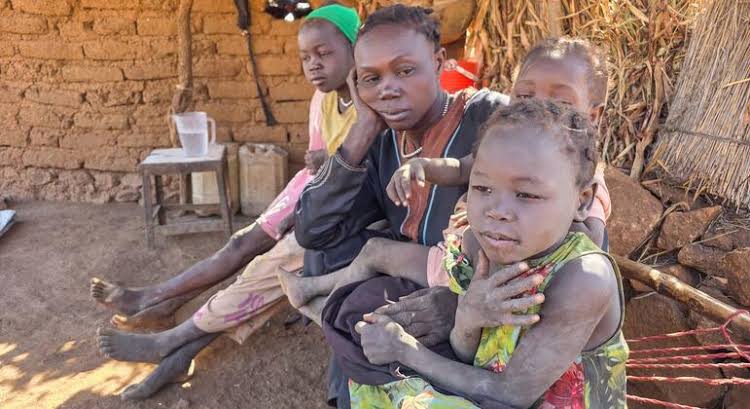
WFP says almost 19.5 million people in Sudan are facing crisis levels of hunger, with some already experiencing catastrophic conditions. The agency also expects about 825,000 children under five to suffer from severe acute malnutrition during 2026.
That means millions of families are depending on food assistance while the conflict makes delivering that assistance increasingly difficult.
In South Kordofan, the situation is particularly serious. Famine conditions have previously been confirmed in Kadugli, while humanitarian access remains severely restricted in several conflict-affected areas.
The crisis is being driven by more than simply a shortage of food.
Fighting has displaced millions, disrupted farming, damaged infrastructure, restricted trade and made it harder for humanitarian agencies to reach people in need.
Millions Displaced as the Humanitarian Crisis Deepens
Sudan's war has created one of the world's largest humanitarian emergencies.
WFP currently estimates that about 9 million people remain displaced inside Sudan, while the agency is reaching more than 4 million people every month with food assistance. Around 825,000 of those people are in Kordofan.
But the need is enormous.
Humanitarian agencies are also facing funding shortages. WFP says it urgently needs $579 million to maintain its Sudan operations through October 2026.
For people living in areas cut off by fighting, humanitarian assistance can be their only reliable source of food.
That makes safe access to these communities crucial.
WFP Demands Answers
WFP is calling for a prompt and impartial investigation into the attack and for those responsible for any violations to be held accountable.
The agency has not attributed the strike to either side of the conflict.
Its message is clear: humanitarian workers and the food they carry must be protected.
For the families waiting for assistance, every safe delivery matters.
And in a country where millions are already going hungry, an attack on a food convoy is not simply an attack on a truck.
It can threaten the fragile lifeline connecting vulnerable families to the food they need to survive.