
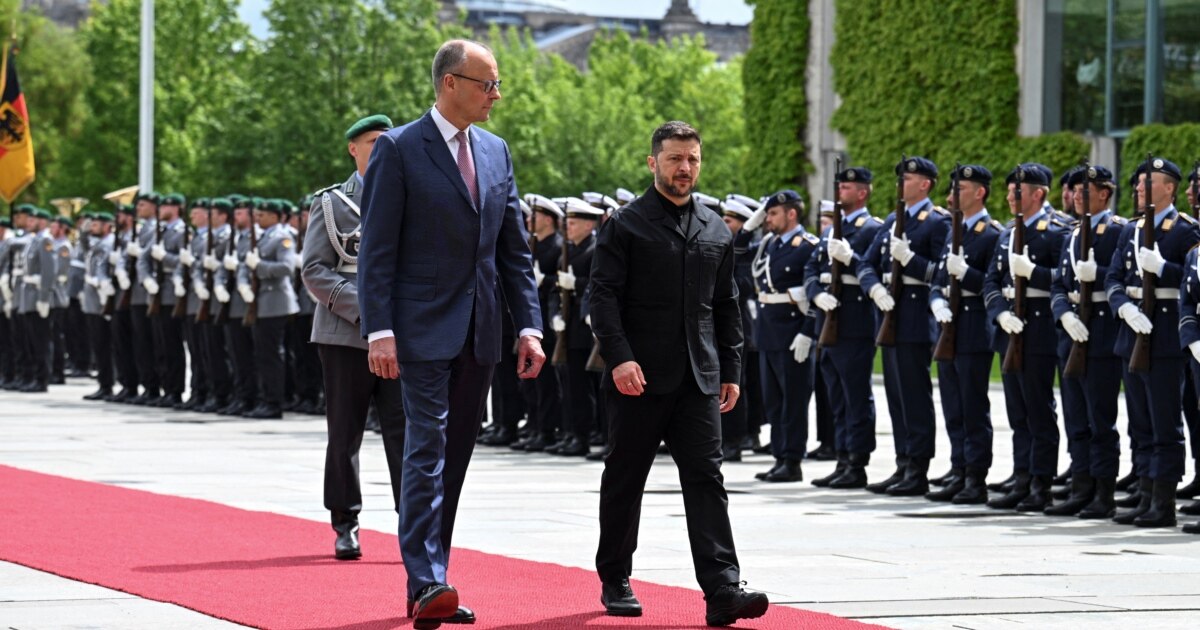
German Chancellor Friedrich Merz arrived in Kyiv on Sunday, October 4, carrying a major new support package for Ukraine and a direct message for Russian President Vladimir Putin.
The surprise visit came as Russian attacks continued to put pressure on Kyiv and other parts of Ukraine. Merz's trip focused on military assistance, energy security, drone technology and preparations for the country's reconstruction.
Germany Pledges More Than $1.5 Billion
Germany announced a new support package worth more than €1.3 billion, equivalent to roughly $1.5 billion.
About €1 billion of the package will go toward military assistance, while around €350 million will support the protection and repair of Ukraine's energy infrastructure.
The energy funding is particularly important as winter approaches. Repeated Russian attacks have damaged electricity facilities, raising concerns about power and heating for civilians during the colder months.
Merz said Germany would continue supporting Ukraine because the outcome of the war also affects the security of Europe.
He travelled to Kyiv with German Economy Minister Katherina Reiche and a delegation of German business leaders, highlighting that Berlin's support extends beyond military assistance to economic cooperation and reconstruction.
Drone Warfare Puts Ukraine Under More Pressure
Drones have become a major part of the war, with Russia using large numbers of unmanned aircraft to attack Ukrainian cities and infrastructure.
Germany and Ukraine are now expanding cooperation on drone production and technology designed to detect and counter hostile drones.
The two countries are also working together in areas involving satellite technology and other advanced defence systems.
Ukrainian President Volodymyr Zelenskyy said Ukraine urgently needs stronger protection against the growing number of Russian drone attacks.
Ukrainian officials reported that Russia had launched around 900 jet-powered drones during the previous week, showing the scale of the challenge facing Ukrainian air defences.
Russian Attacks Continue Around Kyiv
Merz's visit took place while Ukraine was still dealing with the effects of Russian strikes.
A Russian strike damaged Kyiv's Northern Bridge, with Ukrainian authorities reporting that two people were injured.
Merz and Zelenskyy also visited the damaged National Academy of Sciences building. The facility had previously been hit in a Russian attack that killed two people.
The scenes gave the German chancellor a first-hand look at the destruction caused by the conflict and reinforced his argument for continued European support.
Merz Calls on Putin to End the War
During his visit, Merz delivered a direct appeal to Vladimir Putin to stop the fighting.
The German chancellor described the war as senseless and called for an end to the conflict.
His appeal comes as diplomatic efforts to secure a lasting peace remain uncertain.
Ukraine has continued to indicate that it is prepared to participate in negotiations, but major disagreements remain over how and when talks with Russia could resume.
Zelenskyy said the United States was also working to revive diplomatic efforts between Kyiv and Moscow.
Billions in Business Deals Add to German Support
Military and energy assistance were not the only announcements made during Merz's visit.
German companies signed 14 agreements with Ukrainian partners covering areas including defence and reconstruction.
Reuters reported that those agreements were worth about €6.6 billion, while Ukrainian officials placed the value of the broader group of announced agreements at more than €8.5 billion.
The difference comes from the way the two sides count the agreements and commitments included in the announcements.
Germany has become one of Ukraine's most important European supporters since Russia launched its full-scale invasion in February 2022.
Berlin argues that helping Ukraine defend itself is also important for protecting Europe's wider security.
A Clear Message From Germany
Merz's visit delivered two messages at once: Germany wants the war to end, but it is prepared to keep supporting Ukraine while the fighting continues.
The new funding will help Ukraine strengthen its military capabilities, protect its energy system and prepare for another difficult winter.
The expanded drone cooperation could also become increasingly important as both sides rely more heavily on technology on the battlefield.
But the latest German commitments are unlikely to bring an immediate end to the war.
Russian attacks continue, while diplomatic efforts have yet to produce a lasting ceasefire.
For now, Ukraine has received another major show of support from Berlin, while Merz has made his appeal to Moscow clear: the war needs to end.